The Next Level: Where India's Puzzle Gaming Is Headed, and Why We're Building Crack the Vault for It
India's gamers are trading cash stakes for real challenge. Here's what that shift means for creators, for players, and for the vault.
The Crack the Vault crew ·
Picture this. It's 11:40 pm. You're one answer away from cracking a lock, the timer is bleeding red, and you have one life left. Your heart rate says Champions League final. Your brain says: think.
That feeling is the whole point of Crack the Vault. We also think it's where Indian gaming is headed next.
India's game just changed
For years, a big slice of Indian gaming revenue came from games where you put money in to win money back. That era ended in August 2025, when Parliament passed the Promotion and Regulation of Online Gaming Act and banned real-money games outright.
Plenty of people predicted the industry would shrink. It didn't. According to Lumikai's State of India Interactive Media Report 2025, India's video games market, excluding real-money gaming, grew 17% year on year to $1.5 billion in 2025. Lumikai projects it will reach $3.2 billion by 2030.
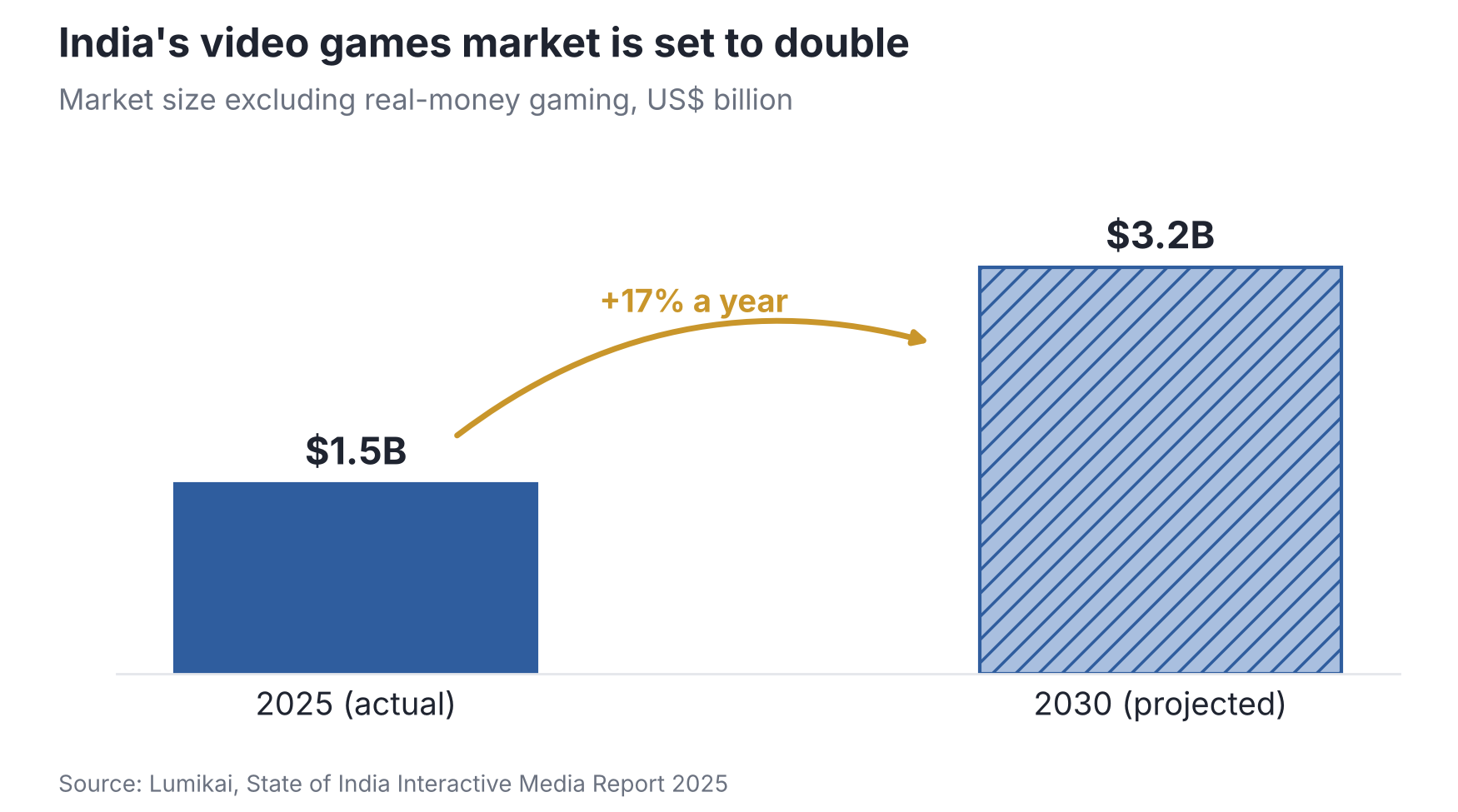
Lumikai projects the market will more than double in five years.
Read that again. The money didn't leave gaming. It moved. Players are now paying for experiences, not for a shot at a payout.
Who's actually playing
The audience is enormous, and younger than you'd think. Lumikai's FY24 report counted 591 million gamers in India, and 148 million of them pay for in-game purchases. Two-thirds live outside the metros, and 43% are first-time earners aged 18 to 30. Average weekly play time rose 30% to 13 hours.
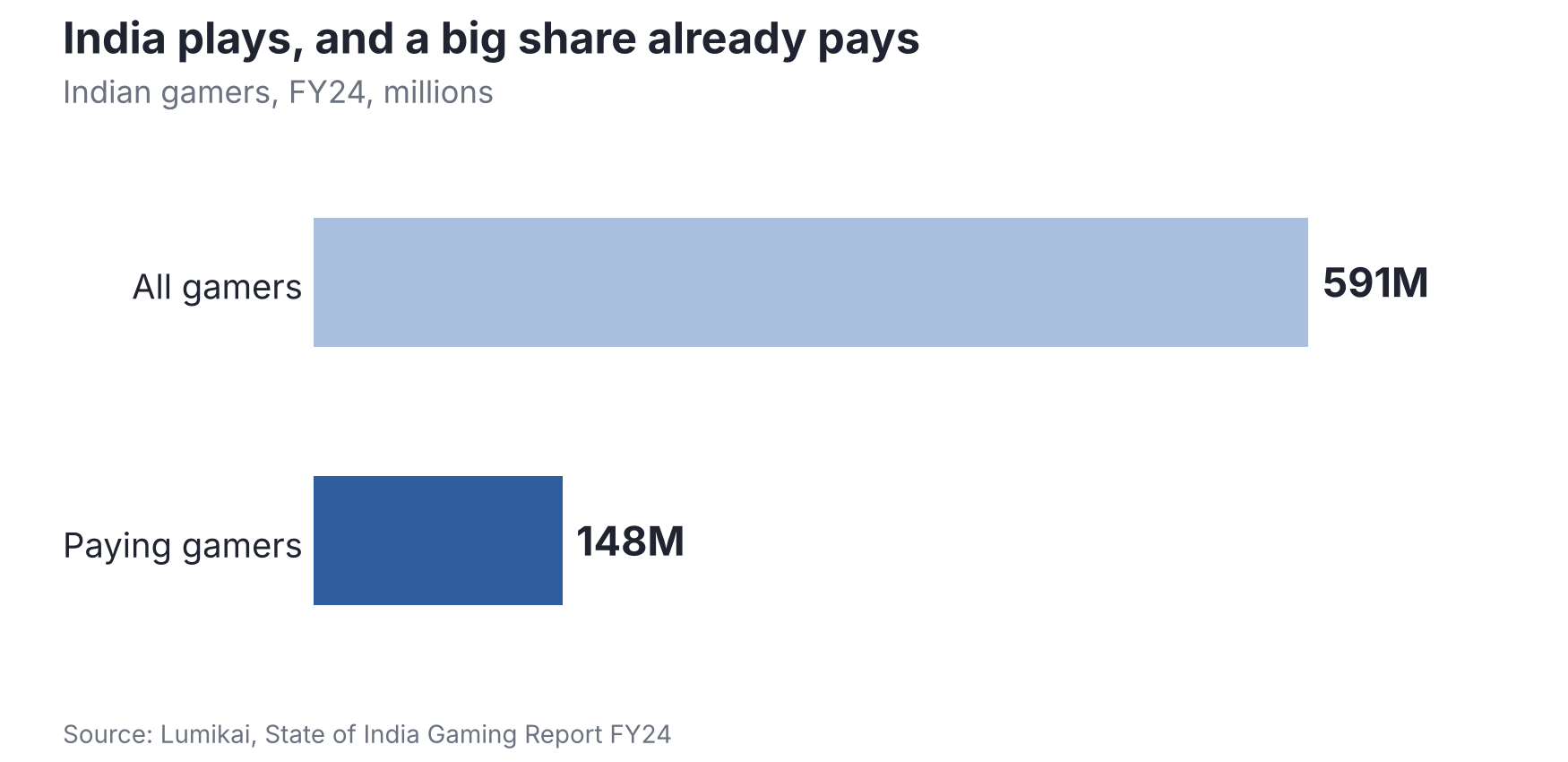
One in four Indian gamers already pays to play.
Here's the takeaway for anyone building a game: Indian players already spend real time and real money on games. The question is no longer "will they play?" It's "what is worth their 13 hours?"
What players want now
We think three demands will shape the next wave of games.
- Short, intense sessions. Nobody wants a three-hour grind on a Tuesday night. A single vault against the clock fits neatly between dinner and doomscrolling.
- Progress that means something. Players want to walk away feeling sharper, not emptier. Levels should get harder for a reason.
- Fair value. Gen Z will pay, but they can smell a cash grab from a mile away. Clear pricing beats endless pop-ups and hidden costs.
What creators now have to build
This is where it gets exciting for creators. When you can't hook people with prize pools, you have to hook them with design. The puzzle has to be good enough to be its own reward.
That's a healthy shift. In the real-money era, the winning formula was marketing spend plus payout. In the new era, it's craft: clever mechanics, a great difficulty curve and a reason to come back tomorrow. That levels the field for small, independent teams. You don't need the deepest pockets. You need the sharpest ideas and the discipline to keep sharpening them.
That's our north star. Crack the Vault started as a passion project for riddle lovers: ten legendary safes, each harder than the last. Every vault has four to six locks. Each lock is a riddle or a maths puzzle, and each right answer earns one digit of the code. You get three lives and two hints, and the clock doesn't stop for mistakes. Simple rules, real pressure.
Next, we're raising the complexity. Upcoming vaults will tie into real-life problems, the kind of reasoning you use when you read a tricky contract clause, spot the flaw in a pitch, or work out why the numbers don't add up. Same adrenaline, sharper payoff.
The best puzzle doesn't just test what you know. It changes how you think.
How Crack the Vault works
We're keeping it simple:
- Free to start. Vaults 1 and 2 need no sign-up. No card, no catch.
- Save your progress. Vault 3 just needs a free account.
- Pro vaults. Vaults 4 to 10 are Pro, and they're free during early access.
- No surprises. When early access ends, we'll announce pricing on the site before it applies to anyone.
Think of it like a puzzle book. The first pages are on us, and if you're hooked, you buy the book.
The road ahead: rewards that matter
Once we reach scale, we plan to bring in Gen-Z-friendly brands as sponsor partners, so that top solvers can earn rewards from them: brand perks, exclusive experiences and recognition that actually means something.
Why sponsors? Because brands want to reach sharp, engaged young players, and solvers deserve more than a leaderboard screenshot. Done right, everyone wins. Players get rewarded for thinking, brands earn attention instead of buying it, and we get to keep building harder, better puzzles.
We'll design that programme carefully. India's gaming law draws a clear line between games played for entertainment and skill, and games where you pay in expecting to win money back. We're building our rewards with that line firmly in mind and will take legal advice before anything launches. We unpack how the law works in our companion post, Not Just Another Gaming App.
The bottom line
India's gaming market isn't shrinking. It's growing up. The next wave belongs to games that respect your time, reward your brain and charge fairly for the experience.
That's the game we're playing. The vault is open. The clock is ticking.
Think you can crack it? The first two vaults are free.
Sources
- Lumikai, State of India Interactive Media Report 2025, as reported by Outlook Respawn: India's video games market hits $1.5 billion
- Lumikai, Indian gaming market to reach $9.2 Bn by FY29 (State of India Gaming Report FY24)
- GamesBeat, India's game market could grow from $3.8B to $9.2B by 2029